
Principles and Practices
Principles and Practices is a statement of the values that guide those involved in the School.
The intent of the School is that everyone attending, however long or short their stay, will find something of value in their lives.

Practical philosophy studied, practised, and lived for nearly 90 years

Valuing real-life experience over theory
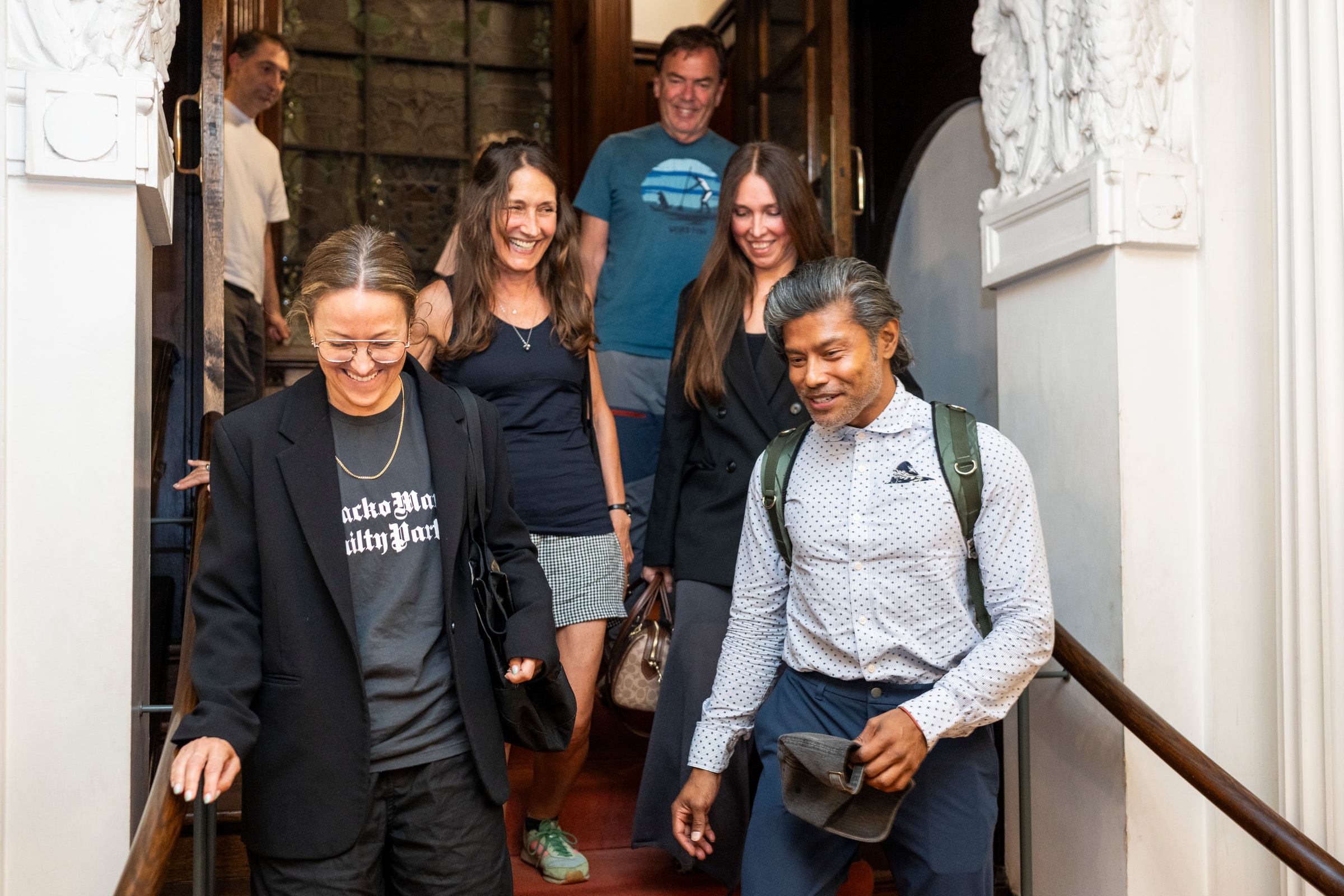
Practise philosophy with philosophers
How do we ensure freedom and prosperity for all?
If you begin to be what you are, you will realise everything.
Shri Shantananda Sarasvati
The School is not only concerned with helping people think more clearly or live more steadily. At its heart is a deeper enquiry into what a human being is, and into the awareness by which anything is known at all.
The School begins with practical questions, because that is where life is lived. What would a wise person do? What matters? How can attention deepen? Over time, these questions often lead further inward, toward the older question every serious tradition has held: who am I?
Study, dialogue, meditation, reflection, and service are not ends in themselves. They are ways of preparing the conditions in which this deeper understanding may begin to appear. What is sought is not a new belief, but a recognition tested in experience and deepened over time.
The School cannot, and does not wish to, press anyone toward this. It only wishes to be recognisable to those who are already looking for it.
Open to all
All are welcome to sample what the School has to offer. No previous study of philosophy or economics is required.
Tutors are students
All tutors continue to be students of philosophy in the School. There is no division between those who teach and those who learn.
Tutors give their time without payment
Tutors give their time for free. The School has no paid teaching staff. This has been the case since its founding.
Course fees
Fees are charged for courses to cover the costs of running the School. The level of fees is set at a rate intended to be accessible. Concessions are available on request.
A charitable organisation
The School is a registered educational charity, numbers 313115 and SC039950. Its purpose is the advancement of education through the study of philosophy, economics, and related subjects.
Conduct
Students are asked not to indulge in criticism of others, but to practise tolerance and respect towards fellow students, towards tutors, and towards the work itself.
Leadership
All matters relating to tutoring are led by the School Leader. The School is governed by an Executive Committee, whose members are listed under Trustees.
Fellowship
Approximately 240 students, who have been in the School for many years, make up the Fellowship. The Fellowship elect the members of the Executive Committee at the annual AGM.
How those in the School conduct themselves
The School is a place of learning where everyone has the opportunity to enquire freely. The following principles govern how those within it relate to one another and to the work.
Respecting each other
- Treat all members of the School with courtesy and consideration.
- Listen to others with full attention. Do not interrupt.
- Disagreement is welcome; personal criticism is not.
- The School's culture is founded on equality. No student is more or less valued than another.
Respecting relationships
- The relationship between student and tutor is one of mutual respect.
- Tutors do not form personal relationships with students outside the School context that might compromise the integrity of that role.
- Idle talk about other members or tutors is contrary to the spirit of enquiry.
Respecting the group
- What is shared within a course group is shared in confidence and does not leave the room. Seminars, talks, and events that are recorded are the exception.
- The group gathers to enquire, not to perform. Contributions are made in that spirit.
- Regular attendance supports both individual progress and the work of the group as a whole.